
A Better Understanding of the Disease Behind Heart Attack and Stroke
Understanding the type and amount of plaque in your arteries may provide a more complete picture of cardiovascular risk.
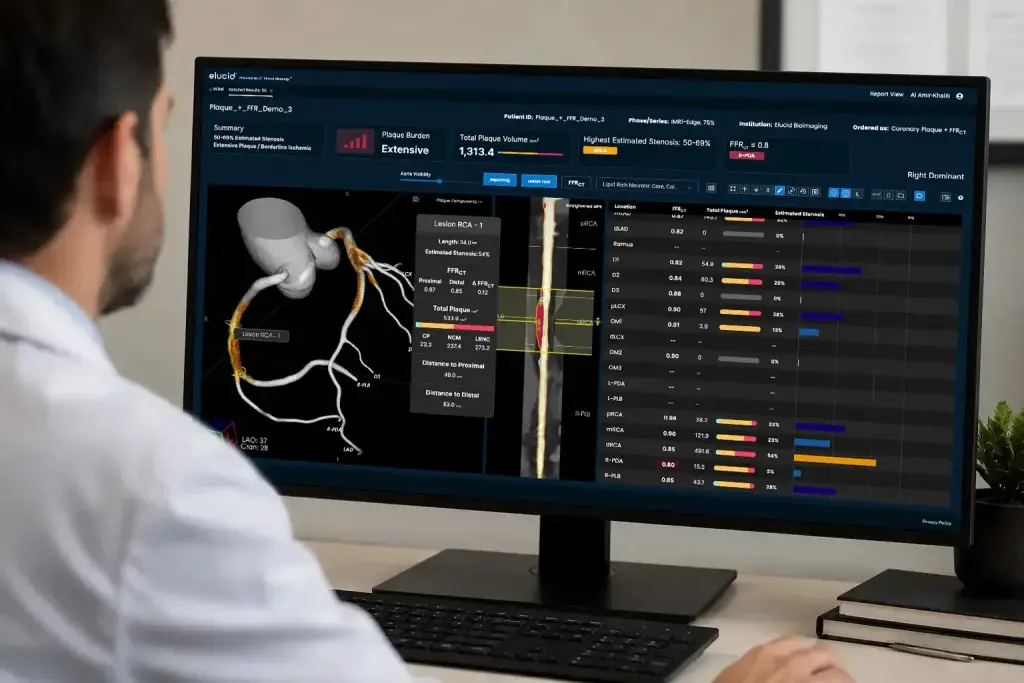
Putting Patients First
At Elucid, our mission is to predict and personalize the prevention of heart attacks and strokes. We create technology that transforms your existing CT images, provided by your physician, into a dynamic, interactive map of cardiovascular disease. Our tool helps your physician see invisible features to create a personalized, precise treatment based on a detailed analysis of your unique cardiovascular profile to improve health outcomes. Have peace of mind around your risk of heart attack or stroke.
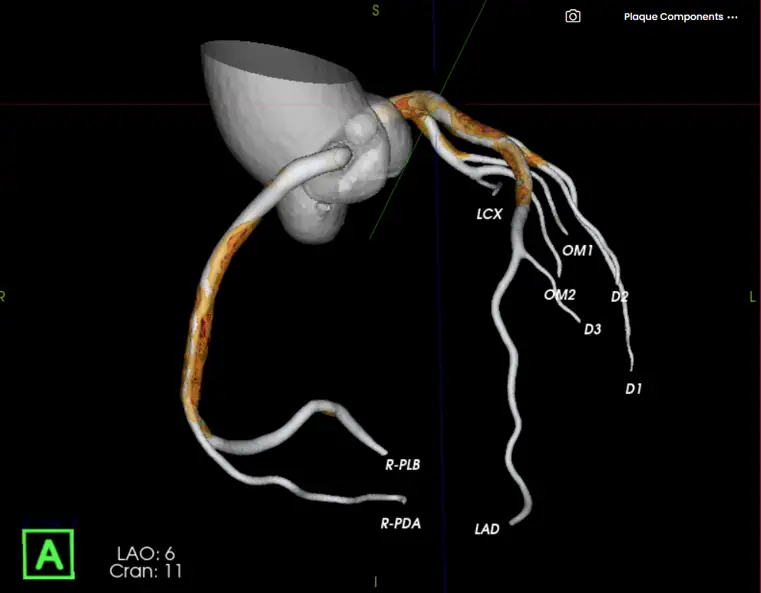
Identifying Individual Cardiovascular Risk
Cardiovascular disease is the most common cause of death and disability globally, largely driven by heart attack (myocardial infarction, or MI) and ischemic stroke.¹ Despite advances in therapies, many high‑risk patients remain undiagnosed until they experience serious cardiac events.
Moreover, WHO estimates 80 to 90% of heart attacks are preventable. At Elucid, we believe that current diagnostics miss key information on the type of plaque patients have in their arteries. While traditional clinical guidelines for coronary artery disease begin with identifying patient risk factors, such as age, diet, and lifestyle, the strongest predictor of heart attack is atherosclerosis, or coronary and carotid plaque buildup.

About half of Americans between ages 45 and 84 have atherosclerosis and don’t know it.2
Patients considered “low risk” still account for nearly half of all heart attacks. A recent study found that following current screening guidelines may lead to missed opportunities for early detection of heart attacks and prevention. Addressing this gap will require a shift in approach from short-term, age-weighted risk prediction toward considering and implementing personalized, lifetime, disease-oriented prevention. Integrating imaging, biomarkers, and novel risk factors may help physicians detect disease earlier, when intervention can provide the greatest benefit to each patient.³
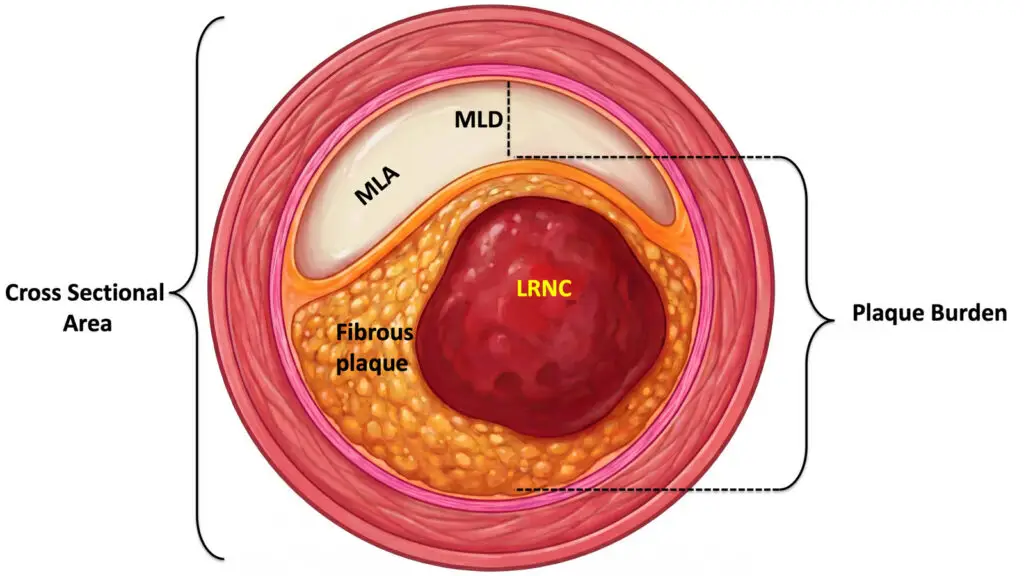
Coronary and Carotid Plaque
References
1 World Health Organization (WHO), Cardiovascular diseases (CVDs). 2017 23, April 2020. Available from: https://www.who.int/en/news-room/fact-sheets/detail/cardiovascular-diseases-(cvds).
2 1. Hafiane, A. Vulnerable plaque, characteristics, detection, and potential therapies, J. Cardiovasc. Dev. Dis. 6 (3) (2019). Available from: https://www.mdpi.com/2308-3425/6/3/26.
3 Mueller, A. S., Leipsic, J, et. al. Limitations of Risk- and Symptom-Based Screening in Predicting First Myocardial Infarction. JACC: Advances, vol 4, number 12,part 2, 1 December 2025. https://www.jacc.org/doi/10.1016/j.jacadv.2025.102361